
Sarah Jaffe on the increasing brutality of the workplace
People have long considered the question of whether work should be enjoyable. In the 1800s, socialist and artisan William Morris wrote of the three hopes that might make work worth doing—“hope of rest, hope of product, hope of pleasure in the work itself.”
Morris acknowledged that the idea of pleasurable work might seem strange to most of his readers, but argued that the inequality that capitalism had wrought meant that some who did no work lived off the labour of others, who were condemned by this system to “useless toil.”
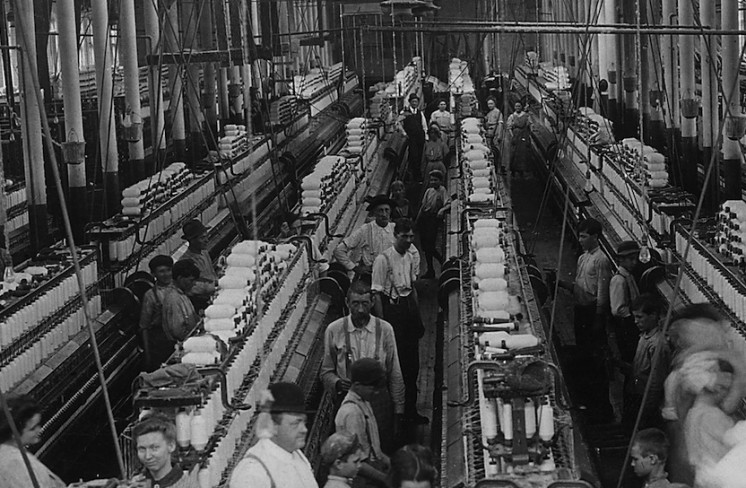
Modern industry had taken away what little independence and power craftspeople might have had and reduced them to interchangeable, robotic wage labourers.
Under capitalism, as Morris argued, whether or not you liked your job—or, like many of us, find things to love and loathe about it at different times—would always be secondary to whether you were producing a profit. No one cared whether the proletariat liked its work—it wasn’t given a choice in the matter.
But those proletarians, too, usually tried their hardest to escape work. The labour movement’s earliest demands were usually for less work—shorter working hours, down to twelve, then eleven, then ten, then eight, plus days off. The strike, the workers’ best weapon, is, after all, a refusal of work, and for a while they wielded it effectively, winning some concessions on the length of the working day and week as well as on wages. Capitalists would give up a little here and there to keep the profits flowing, but they also sought new strategies to keep workers on track beyond simple brute force.
The carrot that was eventually offered to the industrial working class was what is often called the Fordist compromise, named, of course, after Henry Ford’s Ford Motor Company.Workers would give up a large chunk of their time, but a manageable one—generally five eight-hour days of work a week—to the boss and in return they would get a decent paycheck, health care (either provided by the company, in the United States, or, in other countries, provided by the state), and maybe some paid holidays and a pension to retire on. It was Morris’s “hope of rest”—and financial remuneration, albeit at the expense of hope of controlling one’s product—that provided workers with some ability to support themselves, and maybe a family, and to enjoy themselves in their time off the shop floor.
This might be hard for some of us to imagine, now, as we sneak in time to read between checking work emails or waiting on call for the next shift. And it’s certainly not something to romanticise—work was often both grinding and dull, and workers often too tired to enjoy their hard-won free time. But it allowed for a brief period of stability, from the end of the Great Depression until the 1960s, the nostalgia for which still haunts us today.
Like most compromises, the Fordist bargain had left both sides vaguely unsatisfied, and it was held steady largely by repeated strikes from the workers on one side and repeated attempts by the bosses to unpick it on the other. But it was a deal that the ownership class had more or less gone along with when times were good and profits high enough that they didn’t mind the sharing too much. It was less appealing when crisis struck in the 1970s. “By the 1970s, the dynamism the system had displayed in the immediate postwar decades was exhausted, worn down by multiple political challenges and institutional sclerosis,” explained economist James Meadway. The solution to this problem, for capital, was to squeeze labour harder. Companies closed factories in high-wage countries and moved them to places where they could pay a fraction of the rates workers commanded in the United States or the United Kingdom. Working hours began to creep upward, and incomes down; more families relied on two incomes, and with two working parents, no one had time to do the housework.
By 2016, the United States had hemorrhaged enough industrial jobs that Donald Trump made them a focus of his pitch to “Make America Great Again.”
In 2017, after he became president, I went to Indianapolis to visit the Carrier plant. The factory, which had been slated to shut down in 2016, had been a campaign focal point for Trump’s promise to bring good jobs back. When he won, he returned to Carrier to declare “Mission Accomplished,” telling the workers that he’d cut a deal to keep their plant open. But when I arrived, the Rexnord plant around the corner was closing. Those workers didn’t get a visit from the president as their jobs disappeared; nor did the workers in Lordstown, Ohio, where the General Motors plant closed in March 2019.
The workers I spoke to in Indiana and Ohio all wanted to keep the plants open, but none of them waxed lyrical about their jobs. They hadn’t taken those positions to find fulfilment; they took them to find a paycheck. They took them for the weekends they’d have off, the homes they’d be able to buy. When I asked what they’d miss about their jobs, none of them said the work itself—they spoke of co-workers so close they’d become like family, of after-shift beers at the bar across the street, and of the solidarity that came from being active in their union (solidarity that brought them to the picket lines in GM’s 2019 strike even after the plant had been closed for months). But mostly, they spoke of money, of the reality that losing a $26-an-hour job (plus overtime) meant a serious downgrade in their standard of living.
Looming outside the Carrier plant were Amazon and Target distribution centres, the likely future of work for some of the folks let go from their union jobs. The distribution centre or warehouse job has become synonymous with misery these days: stories abound of workers having to urinate into bottles because they’re not allowed enough restroom breaks, being tracked around the facility via GPS, or popping ibuprofen like candy to deal with the aches and pains. Yet even Amazon, in denying the reports of hellish conditions written up by journalist Emily Guendelsberger, touts its “passionate employees, whose pride and commitment are what make the Amazon customer experience great.”
The global pandemic in 2020 just made the brutality of the workplace more visible. The number of people employed in manufacturing worldwide has shrunk, but still the work is done, and more and more of it for pennies and without union protections. Women and children labour in deadly conditions in factories in places like Bangladesh, where the Rana Plaza garment factory collapse in 2013 killed 1,132 workers and injured more than 2,000 more. The day-to-day conditions of Bangladeshi garment workers—or, say, the workers who assemble iPhones at the Foxconn plant in China—range from tedious to backbreaking to deadly. Few seriously expect such workers to like their jobs, though they might face pressure to smile for the factory inspectors on the rare occasions they come around.
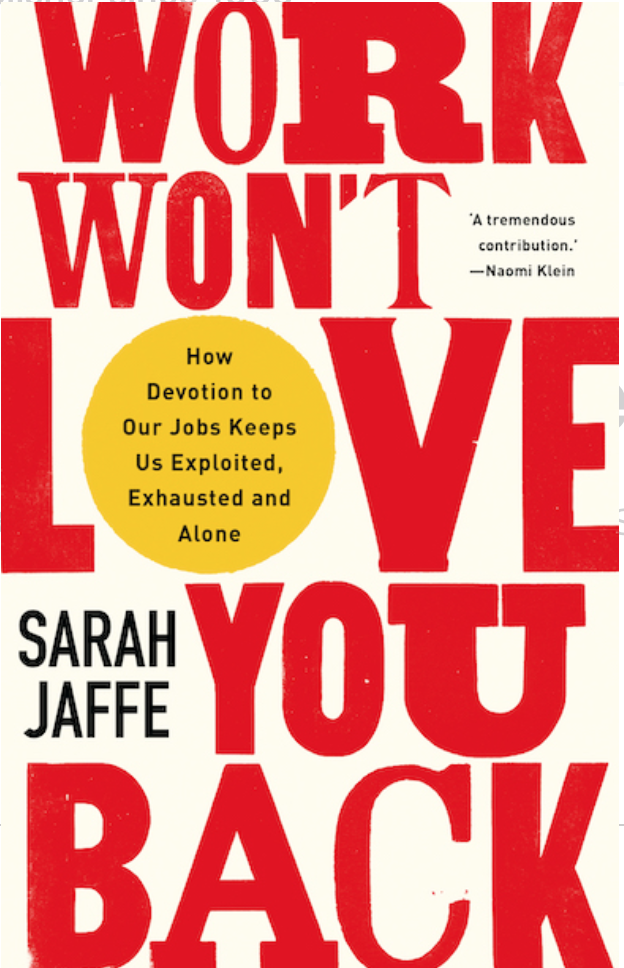
Excerpted from Work Won’t Love You Back: How Devotion to Our Jobs Keeps Us Exploited, Exhausted and Alone by Sarah Jaffe and published by C. Hurst & Co. (Publishers) Ltd. © Sarah Jaffe, 2021. Used by permission. All rights reserved. Footnotes have been removed to ease reading.
Buy Work Won’t Love You Back with a 25% discount at the publisher’s website here using code WWLYB25.
Join us for a Drink with Sarah Jaffe on Thursday 17 Feb, 6pm GMT. £7.50; free for subscribers. Click here to find out more.
Subscribe to the Idler here and get 26% off the cover price plus a free copy of An Idler’s Manual.
Buy single issues here.





You must be logged in to comment on this article.
For unlimited site access, join us as a member here or login