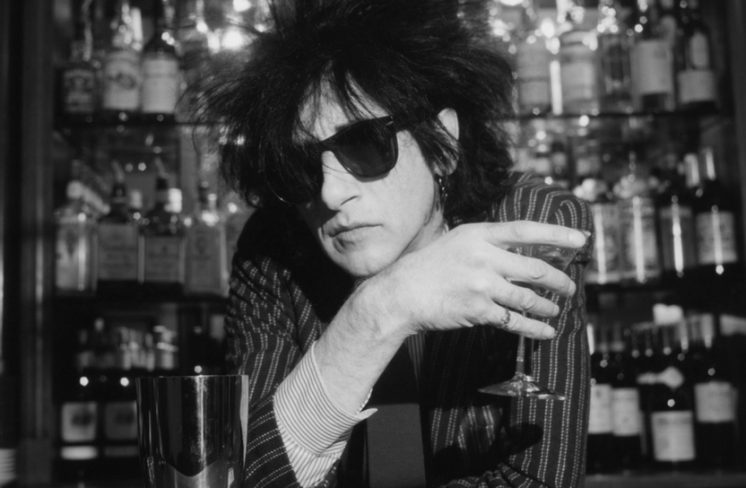
Stewart Lee at the Idler Festival 2025. Photo by Monika S Jakubowska
Stewart Lee tells Tom Hodgkinson about leaving big management, rejecting social media, and saying goodbye to the Observer. Plus his unexpected link with Jacob Rees-Mogg
Stewart Lee is a one-man politico-art-comedy phenomenon with extreme self-awareness and high intelligence. His new show, Stewart Lee Vs the Man-Wulf, feeds the soul and raises tricky questions, such as, why is the Right doing so well? Is it because it’s fun, entertaining, liberating? Lee went to Solihull School on a scholarship, and then to St Edmund’s College, Oxford, in 1986, where he met the young wits of the day, including the Idler’s Art Flâneur, Tim Richardson. He started performing at Oxford, and was a member of a group called The Seven Raymonds. In the Nineties he was on the telly and performed with Richard Herring. He later co-wrote Jerry Springer: The Opera. True to his punk roots, he now tours without big management and runs his affairs himself. For several years he was the Idler’s music writer, and was also a columnist on the Observer, though left when the paper’s ownership was transferred from the Guardian to a new company called Tortoise Media. Below is an edited version of the chat I had with him at the 2025 Idler Festival. I started by asking him why he’s a Neil Young fan.
Tom Hodgkinson You saw Neil Young at Hyde Park yesterday. He’s hardly punk, is he?
Stewart Lee He’s radical. There’s “Southern Man”, which is about racism in the South of the States. He did “Throw Your Hatred Down” and changed it to “Throw Your Weapons Down”. He did lots of environmental songs. So it seemed as close as you could expect – for someone in a big space like that – to get to addressing anything radical.
TH And is that one of the things that attracted him to you in the first place?
SL Well, he ebbs and flows. He was a Reaganite in the 80s, and he was explicitly quite homophobic then, as were a lot of rock stars, but yes, it’s interesting seeing that done on a big platform.
TH I wanted to ask about your own counter-cultural education. You’ve said, “I’m a relic of the counter culture” – things like Crass, punk bands, hardcore punk – the radical tradition, which you became part of and are still part of. When did that start for you as a Birmingham grammar school boy? Do you remember the first glimmerings of getting some kind of insight into radical music, and politics?
SL Everything came through John Peel. He didn’t just do just music sessions – there were comedians and performance artists as well. Eric Bogosian, the American performance artist, did a John Peel session. When I first started seeing stand up, it was kind of an adjunct to that scene. Unless you were in London, where there were comedy clubs, then the only place you saw new comedy acts was opening for bands. I saw Ted Chippington opening for The Fall. I saw Peter Richardson of the Comic Strip opening for Dexys Midnight Runners. And Billy Bragg would always have weird cabaret shows. In the early days it was like the circus had come to town. I used to like this Stooges-type rock band called the Sid Presley Experience. And Phill Jupitus, when he was a performance poet, and the Flying Chickens, a Japanese feminist experimental performance art collective which found themselves performing to rock audiences. And then going to the [Edinburgh] fringe for the first time, where you saw all those people together. Seann Walsh saw my new show and he said, No one’s going to write shows like that again. And it’s partly because I’m still inspired by that era of people. But also I was lucky enough to be young at a time when housing was cheap. You could spend ten years working out what you were doing.
TH The 80s was actually a fantastic time, we now realise.
SL We now realise, yeah. At the time, we were like, this is a horrible decade…
TH …of Thatcherism, greed, competitiveness… but looking back, it seems like a kind of Halcyon era of creative freedom and reasonably comfortable lifestyles.
SL There’s a whole generation of people who benefited when the Thatcher government tried to massage the unemployment figures by inventing something called the Enterprise Allowance Scheme. Geoff Dyer talks about going through that. It was kind of an unofficial bursary for artists. He says he had three years where he read loads and studied lots. He basically gave himself another massive skill set. When I first came to London I got a paid job fact checking for a publisher. It’s a job that wouldn’t exist now, it would be an unpaid internship, and I was fact checking for a multi volume encyclopedia of the history of gardening, which, again, wouldn’t exist anymore. I used to have to travel around every day between Kew Gardens library, the Royal Horticultural Society Library in Vincent Square and the Natural History Museum library, and check the names of things in books, which, again, you would do online now. I loved hanging around at Kew Gardens. It was an interesting time to be there. I remember overhearing the conversations of the academics there who very much saw it as a library of plants. And they were being told by the Thatcher government that they had to put in rides and shops and things like that. And they were very angry about the idea that it had to be a place of entertainment and fun. At the end of it, when I got enough gigs to quit, I went up to the librarian and I said, I’m handing my card in, and she said, why? I said, I’m quitting this research job. And she said, what are you doing instead? I said, I’m going to be a comedian. And she said, Oh, you never seemed very funny.
TH Your show Stewart Lee vs The Man-Wulf is great. It’s a very brilliant, curious piece of work. It’s almost like a kind of absurdist play, but some of it felt like it had come from the stuff you got as an undergraduate studying English… maybe post-structuralism?
SL I don’t know what that means. People say, I’ve written a degree paper on you. Oh, can I read it? And I read it, and they tell me I’m an example of Brechtian alienation.
TH Did you enjoy being a student?
SL Yeah, absolutely. Real life didn’t match up to it. It was fantastic. 1986 was a great time for indie music, and there were lots of good venues in Oxford, and it was a cheap time to go to the Edinburgh Fringe. The student drama societies still had money in their bank accounts because they’d done so well for the first 40 years of the fringe. And so they could help to pay for shows. Some of what I studied still stays with me – not the things you’ve mentioned – but I was really happy to be able to get some lines from Anglo Saxon poetry to number one in the pop charts with Asian Dub Foundation.
TH What you’re doing in your comedy… it’s not academic then, but it’s maybe just intelligent.
SL I’m really lucky because I get to go to all sorts of different towns around the country. In Northampton or Derby, where no one would go and see Brecht or Beckett, you can rip things off from that and put it into stand up. You use the show as a Trojan horse to do art in places where people wouldn’t normally go and see it. I don’t flag it up as that, though… If you told people you wanted them to come and see a two-hour show with multiple personalities and other ideas about taste and accountability, they would think – that doesn’t sound like a fun night.
TH The other thing that struck me about the last couple of shows I’ve seen of yours is your DIY ethic. You went through a phase of being with what you call rock-and-roll management, but then you got out of that, and now it’s you selling your merch after the gig.
SL This show is uncharacteristically complicated – I’ve got a two-man crew on the road with it to operate all the bells and whistles in it, costume changes. But I try to keep the team really small. I go out to all those provincial theatres for the lowest ticket price they’ll allow me to. The way I can do that is because I’m not with big management that’s taking lots of money off. I mean, I was with a company called Avalon in the 90s, and my ethic since leaving them has been to do the opposite of everything they would do. And that’s worked really well. They had a promotions department and a live department and a television writing department, and the live department would run your shows at a loss, so that you’re in debt, and then you had to work the debt off by writing for the television. It was like being – not to trivialise the American slavery experience – but it was very like what they call Jim Crow, where you had to basically buy the tools back from the plantation owners who set you free. I never really saw any money from comedy until I left them in the mid noughties. You do telly, but then everything you made on that would be lost on touring. They keep you in a loop.
TH Wow.
SL In the mid 90s, I was in a double act with Richard Herring. We used to do quite big theatres. We never made any money. The first thing I did after leaving Avalon was a week at the old Bush Theatre doing a one-man show about Judas that I wrote – and I got paid for it. I just couldn’t believe it. It just seemed amazing that the amount I was paid related to the amount of people coming through the door. I worked on Jerry Springer: The Opera, which millions of people saw in huge theatres, but I never really got paid anything for it because of the legal case against it. The producers’s driver earned more than I did. So I had to get out of showbiz and work out how to run everything at a basic level. And that’s been really great. I’ll see more of the money, and the audience will pay a third of what they did before. I remember talking to [musician] Mark Eitzel from American Music Club. He said the only money he ever made on a record was one he pressed up himself and did 500 of and sold out of a case afterwards. There’s something to be said for taking back the means of control.
TH Things are gloomy now for creative people and this is the fault of the tech bros and social media. Can you talk a little bit about why you rejected social media?
SL I didn’t want to get in trouble. I try to reach as many people as I can without appearing in places where I’ll be noticed by people who’ll complain about me, because I had a massive piece of work shut down. If I was on social media, I’m the sort of person who’d say something at two o’clock in the morning and never work again. So I avoid it for that reason. Also, I think it’s really important to make a separation between the person and the work. Social media requires every band, every musician, every writer, to be a full-time personality advertising themselves. Loads of writers got into writing because they don’t like people and want to be alone. And yet, now they’re expected to be performers and have social media platforms and “engage” with people. Also, it does seem fundamentally immoral – no one gets paid. Your stuff gets put up there and you’re supposed to be happy that it’s there, because it might lead to some endlessly deferred point where you’re remunerated for it. And yet, all the time, the tech companies are getting rich from the advertising that they generate. So yeah, I won’t have anything to do with it.
When I quit the Observer, people said maybe you should do Substack. But the problem with that is, I’d have to get indemnified legally. Somehow I’d have to have my stuff checked by lawyers. And I wouldn’t have any control over what happened to it, and it would be seen by people who might complain about it. There was a golden age, that even I was aware of, where really bright, clever, funny people were able to build audiences through social media. But that’s finished now, because the algorithm has been gamed, by people like Elon Musk, to drive people away from that kind of content and towards fascism and their agenda. Horrible content holds people’s attention for longer than positive content. So everything is in its death throes.
TH People forget that Google and Meta are run by Trumpy libertarians.
SL It’s really hard trying not to cooperate with those people. It’s like trying to get the eggs out of a baked cake. It’s difficult to buy things without Amazon, because all the shops have shut down. And it’s quite hard to communicate with people without using the platforms.
TH Even supposedly radical people happily pump a lot of stuff onto YouTube, which is owned by Google, a libertarian advertising sales business.
SL Every time you buy anything off Amazon you’re contributing to the funding of Trump. I don’t see any way out of the mess we’re in.
TH You don’t see any way out? Don’t you think there’s hope in a new Left with new people in it? A new Green Party?
SL There’s absolutely no hope whatsoever because the Liberal-stroke-Left in this country will be split four ways at the next election, between Greens, Lib Dems, the Labour Party, and whatever Corbyn sets up. Then Farage will get in.
TH Someone told me that Farage has more Instagram followers than all the other MPs put together, so therefore the Left has to engage more with Instagram and so on. Great.
SL Hopeless, yeah, hopeless. I’ve got one big tour that I can do in between my daughter’s GCSEs and hopefully A levels in 2028 and then in 2029, when Farage gets in. I think a lot of the places I play will start to close down. I think he’ll do to places like the South Bank what Trump’s done to the big cultural institutions in the States – try to emasculate them. I think local theatres will all have their funding cut, and I think we’ll enter a kind of cultural dark age. So I need that next tour to do well.
TH You’re doing a lot of gigs, and while it’s great for us punters, I worry that you’re working too hard.
SL If I don’t keep busy, I become very depressed. Also, I could do 30 dates in 6,000 seaters. But the thing is, first of all, you end up like a fascist rally. You see it with bands, they write increasingly simplistic music to create “lighter-in-the-air” moments, or today, mobile phone in the air moments. But I like the room to be divided against itself. I think the experience is better in smaller rooms. So I’d rather do 250 dates in rooms between about 500-2,000. Also, the shows get better the more you do them. And the great thing about this one is I had a version of it that I got on its feet in December [2024], and all the things in it are becoming more relevant to the point where it’s ludicrous. There’s a whole thing about a moon that looks like Gregg Wallace that flies up over the city. I want every show to be a memorable one where something special happens, and it’s harder to contrive those things in the big rooms. And it’s about keeping it cheap. My son was studying Waiting for Godot, and the only production of it you could see during the A level period was the West End one. That’s 80 to 120 quid. And when I was his age, there were theatre and education groups… it cost 50p and they only had a stick for the tree, but it was better than the one in the West End. Matthew Parris was on the radio the other day, and he was talking about the arts. He was saying, the problem is people can’t afford to see it now. He was waffling on about it, and I thought, when his party were in, they blocked attempts to regulate ticket touts. They said that it was a socialist intervention in the marketplace. Tickets, they said, should be allowed to go onto the black market, because that’s what the free market was about. So, you know, it was an ideological position against allowing people to see stuff.
Audience member I was at your Snowflake tour at the Lowry Theatre. I don’t know if you remember the woman who stood up at the very edge of the balcony and heckled you at the start of the second act? I just think we should give Stewart massive recognition for how he handled that. You talked her down brilliantly.
SL She and her partner drank a box of wine in the interval – they’d smuggled it in with them. And they had sex where they were sitting. After lockdown, a lot of people had gone mad, and the security staff in those theatres are all just volunteers, often pensioners. They had to go and find some tough men somewhere to deal with it. I think she was just really confused. But I did what I always do, which is to treat heckles as if they’re genuine inquiries and try to answer them. Which is also what Jacob Rees-Mogg does, I’ve noticed. Why don’t you fuck off? Well, I’m afraid I can’t do that because I’m contractually obliged to stay here.
Audience member My question is about how your comedy relates to upcoming generations. How much of your material is now shaped and influenced by people who you need to persuade, rather than those of us who are already convinced.
SL The spread of the audiences are quite interesting. Friends of mine keep telling me how their children talk to them about me, like they’ve discovered this bloke. I think I’m entering that phase where, when we were young, we might go and see some old blues singer before they died. And you also get three generations of a family coming. But I could do with more young people. I need a lot of people to come in before 2028 when we’re all stopped from ever working again.
Audience member How much of your pessimism about current times is due to the fact that you’re getting a bit old?
SL I do think it’s important to separate the natural pessimism of age from the really difficult situation we’re in. Yes, everyone thinks that when they grew up was the peak time. But 75% of animal and insect life on earth has died in the last 40 years, right? That didn’t happen in the previous 40 years, or the previous 40 years to that. So that is objectively worse. Social mobility is in reverse in this country. There was a window after the war for working class people to get an education and a cheap place to live and all that. That has closed. I think it is a genuinely difficult time. It’s pessimism, but it’s accurate. I was reading Boswell and Johnson going around the Scottish Highlands in, 1750 or whatever, and everywhere they go, people say, you should have been here ten years ago.
Audience member Why did you decide to quit the Observer?
SL First of all, I found out that the new editor had been at George Osborne’s wedding, which is reason enough to quit, isn’t it? Secondly, I’d Google the people who were taking over, and find out that, two months previously, they’d been a foreign editor of the Telegraph, or something like that. Then somebody sent me an email about some admin which they sent to literally 1000s of freelance journalists, and they didn’t blind copy it. So for months afterwards, every time there was anything in the news about comedy, I’d get dozens of emails. So that was annoying. And actually, it didn’t look to me like they were on top of security. I needed to know that they were competent at what they were doing, because I’m continually threatened with legal action for writing jokes and the Observer’s legal team normally managed to nip it in the bud before it happened. I didn’t want to write for a newspaper that had people that had worked for the Telegraph taking over jobs. And it’s interesting that the week after I quit my column, that space was taken by Nick Clegg. It’s just ridiculous, he’s spent the last 15 years whitewashing Facebook, he’s one of the people that’s responsible for the corruption of the news media environment. So to give him a platform seemed just outrageous, really. It was getting increasingly difficult to do because of, for want of a better word, THE RIGHT … I mean, there are people I was advised never to write about because they were too litigious. Even if what I was saying was true. And there were institutions I was told not to write about because they were too powerful and they couldn’t really cope with the legal threats, even if what you were saying was true. So I’d love to do it again, but they’d need to have lawyers.
TH What about your Idler music column? Because you quit that too.
SL I just ran out of time. I mean, it took me a week. And was it… sixty quid I got paid?
TH Fifty.
SL I do miss it, because it did force me to engage with new culture. I used to write about people who have been knocking around for 50 years, but it also made me find new things. And people were very grateful for any kind of coverage. I think that something appearing in hard copy just feels significant.
Audience member We’re constituents of Nigel Farage. During the election, people paid to go and see him at the local theatre. Any chance of you being brave enough to come?
SL I used to do village halls on Dartmoor and in the Yorkshire Moors, and I used to go out to the Shetlands. I want to get back to going to all those sorts of places for the fun of it. And it’s really interesting to play to people who aren’t necessarily your audience, but have come because something’s on. Well, I’ve got a website, and that’s got all my dates on, and there’s a mail shot that goes out every month saying where I’m playing. But one of the problems is that I noticed the Northampton theatre always used to fill up for two nights, and it didn’t this time. And I think that’s because the town has basically gone bust. So many local councils are going to go bankrupt in the next few years, and that will affect what, where and how people can see shows.
TH Stewart Lee, it’s been a thoroughly depressing three quarters of an hour. Thank you.
This article appears in our December 2025 edition, Idler #106 – out now.
Subscribe here and get 12% off the shop price plus a FREE copy of Idle Thoughts by Tom Hodgkinson, worth £8.95.
Subscribers may comment. Please add your idle thoughts using the box below.
A Drink with the Idler
“A Drink with the Idler” returns on 13 November when our guest will be the Idler‘s Art Flâneur Tim Richardson (below), who will be revealing the secrets behind England’s landscape gardens. Thursday 13 November, 6-7pm. Click here to book – it’s FREE to subscribers.
Our December 2025 issue is available in Waitrose, Waterstones, Smiths Travel outlets, select Smiths high street branches and around 100 indie stores. Click here for your nearest stockist.
Subscribe to the Idler here and get 12% off the cover price plus a free copy of Tom Hodgkinson’s latest book Idle Thoughts: Letters on Good Living.
Join us for a week of walks, talks and yoga on the Idler pilgrimage Retreat, following the footsteps of St Francis of Assisi through the glorious Umbrian countryside.
Join the Idler Spanish Retreat and relax at a finca in a twelve hectare garden in the desert of southern Andalusia. Learn about flamenco and the literature and turbulent history of Andalusia, visit the oldest Moorish citadel in Spain, walk along the unspoilt Cabo de Gata coastline and practise yoga.
The Idler’s Digital Academy membership gives unlimited access to 80+ online courses, plus Idler magazine in digital form, website access, back issue archive, audio and video channels.