
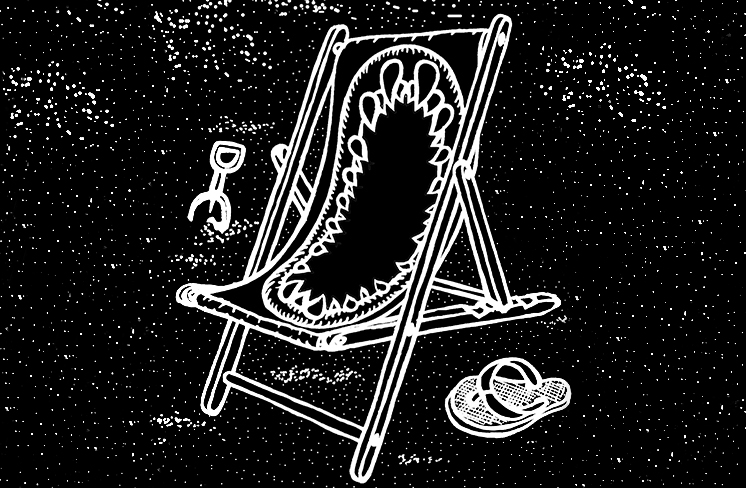
WHO DOES NOT love a deckchair? Wittgenstein did. It was the only the only item of furniture he allowed in his study at Trinity, Cambridge; supposedly a testament to his asceticism, I instead saw it as the ideal solution to the problem of how to manoeuvre something comfy to sit on up the narrow stairs to my study. But that greatest of philosopher of the twentieth century saw in the deckchair a sufficiency of design and purpose should say something about the perfect utility of this furniture item. Imagine this: a chair so comfy you can sleep in it which can be carried when not in use. The deckchair symbolises ad hoc leisure, snatched naps, impromptu basking. It speaks to us of the sea, wherever it is; in my study, relaxing in it, I hear the faint calling of gulls, and even, in deep reverie, the vanished days of the ocean liners whence it got its name. Somewhere, a bell rings; it is time to rise, and dress for dinner at the Captain’s table.
NICK LEZARD
From The Book of Idle Pleasures (Ebury Press), ed Tom Hodgkinson and Dan Kieran
. Illustration by Ged Wells



You must be logged in to comment on this article.
For unlimited site access, join us as a member here or login