

WHEN the American pharmaceutical giant Eli Lilly launched Prozac in 1987, it went to a branding agency to devise the best name for what was technically fluoxetine hydrochloride.
The admen’s answer was Prozac: it hinted both at ‘Professional’ as in ‘Pro’, ‘Activity’ as in ‘Ac’ , with a jazzy extra ‘Z’ thrown in to give those taking a pill a ‘sense of power’.
Thanks to an excellent New York Times piece this week, we now know more of the inside story of how Prozac was marketed to millions of Americans. As someone with a long-running battle with the Black Dog, what I’ve learnt about the glib and superficial way antidepressants were marketed as a cure-all for the human condition has left me fuming.
Antidepressants are not another consumer product to be jazzed up by marketing men. They are highly complex drugs. Even in the corridors of neuroscience, psychiatrists now admit that they are not exactly sure of the precise way antidepressants affect brain chemistry.
No-one now accepts fatuous explanations along the lines of: the drugs ‘increase levels of serotonin’ – this despite decades of research and far more sophisticated brain-scanning techniques.
Nor do they work for everyone. My psychiatrist believes the drugs work immediately for around 30 per cent of those he treats with another 30 per cent of patients being helped over time. The last third of his patients see no improvement on antidepressants.
Or as the Royal College of Psychiatrists puts it: “Antidepressants don’t necessarily treat the cause of the depression or take it away completely.”
Then there’s the side-effects. Even the Royal College says:
“For the first couple of weeks, they can make you feel sick and anxious. This can cause indigestion, but this improves if you eat. They can also cause diarrhoea, constipation and tiredness. They can interfere with your sexual function.”
Meanwhile, the Royal College continues:
“Evidence suggests that young people who take SSRIs have increased suicidal thoughts (but not actual suicidal acts). Therefore, in the UK, SSRIs are not licensed for people under 18, although specialists may use Fluoxetine in some cases.”
You might conclude that I therefore would never take antidepressants. Wrong. Over the years, my depression has at times been so severe, and its physical symptoms so debilitating, that there has been nothing for it but to take drugs.
At the height of the two depressive episodes I have experienced, I was in agony, such pain that I wanted to commit suicide. It was not that I didn’t like my life. I just wanted to end the pain. The only option doctors can offer for acute clinical depression is drugs. So I took them. And I did get better.
Antidepressants are serious drugs for a serious condition. They should not be marketed for life’s ills, what Freud called our ‘ordinary human unhappiness’. They are for a serious illness. Like marriage, they are not to be embarked on lightly or for problems we hitherto didn’t know we had. The problem is that GPs have an average of eight minutes to deal with someone finding life hard. No wonder the drugs are been freely doled out when therapy and other approaches are time-consuming and not readily available.
For anyone who is suffering mild anxiety, feels sad and wonders if they are depressed (you are not: if you have clinical depression, you know – see above) please try other sanity-saving approaches before you begin the drugs. For some it’s a walk. For others it’s a trip to the hairdresser or planting some bulbs. For me, I have learnt how to keep the Black Dog on a firm leash thanks to the healing power of poetry.
It’s free, has no side-effects, keeps me in the moment, stops me worrying about the future or regretting the past, and provides a positive narrative in my head. Some of our greatest poets were victims of melancholy: reading Keats’s ‘Ode on Melancholy’ cheers me up. I feel less alone.
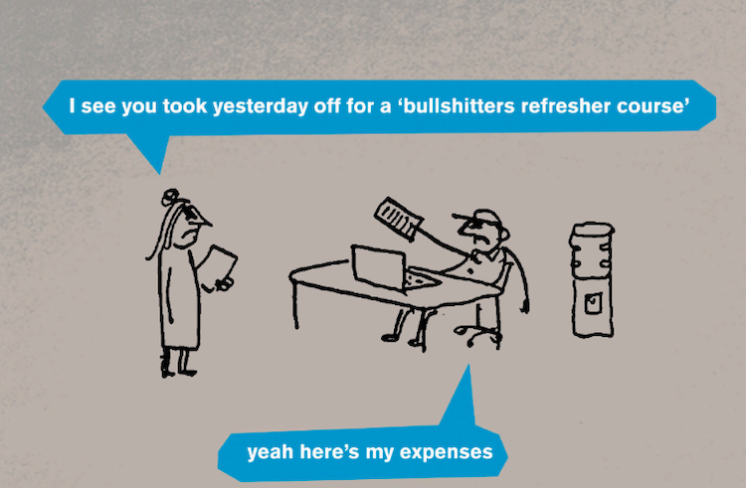
I’m also an advocate of B vitamins (good sources include tuna, lentils, eggs, pulses, leafy green vegetables); and learning to practise mindfulness — non-judgementally focusing on what one is experiencing in the moment. I have found the easiest way to incorporate mindfulness is to decide on a ‘mindful activity’: despite my husband making jokes about Lady Macbeth, mine is hand-washing. Incidentally, jokes of course are best of all for puncturing the gloom.
My other failsafe is noble deeds. I always feel better after one of the poetry workshops I run at our local prison. Indeed, I feel positively professional, active, and with an extra ‘z’ in my step.
ENDS
What helps your depression? Please email your “Cures for Melancholy” to mail@idler.co.uk
Rachel Kelly’s memoir Black Rainbow: How Words Healed Me – My Journey Through Depression will be published in paperback by Hodder & Stoughton on 9 October, price £8.99. Its accompanying app, also called Black Rainbow, is available for download on the Apple App Store and Google App Store for £1.49. All author proceeds of the book and app are being given to the charities SANE and United Response. Follow Rachel @rache_Kelly or go to www.black-rainbow.co.uk
Rachel is running a series of workshops at the Idler Academy to help those afflicted by depression. Click on the bar on the right for more information.


You must be logged in to comment on this article.
For unlimited site access, join us as a member here or login